Announcement for JEFS users: Multi factor authentication will be needed to access the Judiciary Electronic Filing and Service System beginning September 13. Click for more information about multi factor authentication for JEFS.
Legal Community Gathers for 2026 Hawaiʻi Access to Justice Conference
Posted on Jun 23, 2026 in Featured News, News & ReportsMore than 250 members of Hawaiʻi’s legal community gathered at the University of Hawaiʻi’s William S. Richardson School of Law on June 19 for the 2026 Hawaiʻi Access to Justice Conference, an annual event focused on expanding access to legal services and ensuring meaningful access to justice for all.
The conference, titled “Justice for All Means All,” brought together judges, attorneys, legal service providers, educators, and community advocates for a full day of workshops and discussions examining both the progress that has been made and the challenges that remain in providing equal access to justice.
Opening the conference, Hawaiʻi Access to Justice Commission Chair Joseph E. Cardoza praised the work of those committed to serving individuals and families who might otherwise struggle to navigate the legal system.
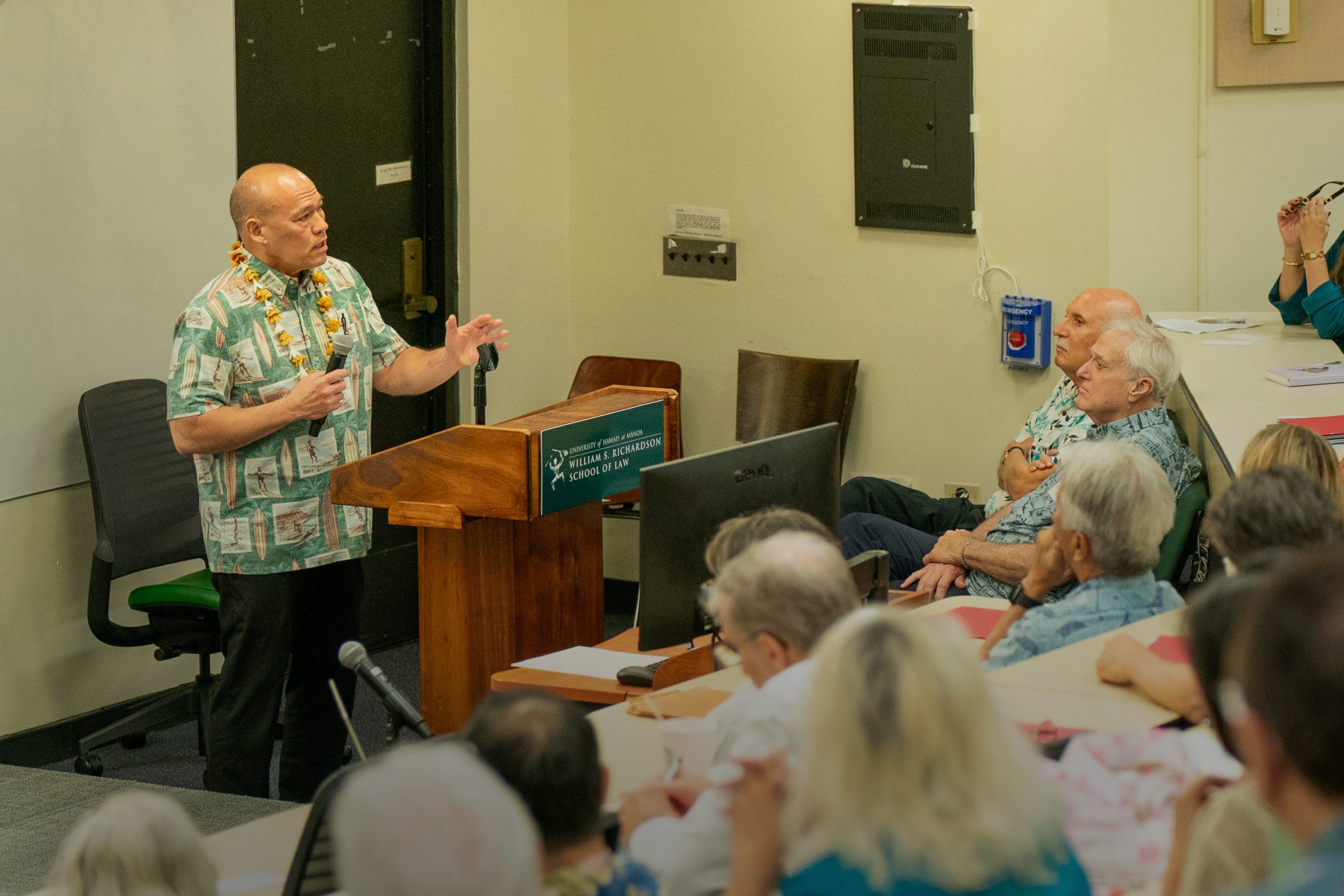
Chief Justice Vladimir P. Devens speaks at the 2026 Hawaiʻi Access to Justice Conference at the University of Hawaiʻi’s William S. Richardson School of Law on June 19, 2026.
Chief Justice Vladimir P. Devens, addressing the conference for the first time as Chief Justice of the Hawaiʻi Supreme Court, thanked the many attorneys, volunteers, and legal service providers who dedicate their time and expertise to helping others.
“To our legal service providers, our pro bono attorneys, and every single person who gives their valuable time to volunteer, a sincere and grateful thank you,” Devens said. “When you take on a pro bono case or volunteer for a shift at a self-help center, you’re doing far more than providing legal advice. You’re offering hope to folks who are going through some of the most difficult times of their lives.”
Devens also spoke about the importance of meeting people where they are and using technology to make the courts more accessible.
“We’re living in an era of unprecedented innovation,” he said. “These new tools, including artificial intelligence, present a historic opportunity to transform how the public interacts with the courts. We can and absolutely must leverage technology to deliver justice.”
As one example, Devens highlighted the Judiciary’s free online chatbot, KolokoloChat, which has received more than 18,500 sessions since its launch in May 2025. Approximately 37 percent of those sessions were submitted during evenings and weekends when court staff would otherwise not be available to assist the public.
Several organizations dedicated to expanding access to justice in Hawaiʻi staffed information tables during the conference. This included a Judiciary table that provided information about meaningful tools for the public, including the Judiciary’s eReminder system and Fines and Fees Calculator.
Attendees had the opportunity to participate in a series of workshops covering a wide range of topics, including landlord-tenant law, immigration, debt collection litigation, the state’s new parentage laws, and more. Several members of the Hawaiʻi State Judiciary served as presenters, including Fifth Circuit Chief Judge Michael Soong, Circuit Court Judge Kirstin Hamman, District Family Court Judges Jessi Hall and Andrew Park, and District Court Judges Shellie Park-Hoapili, Jill Hasegawa, and Kirsha Durante.
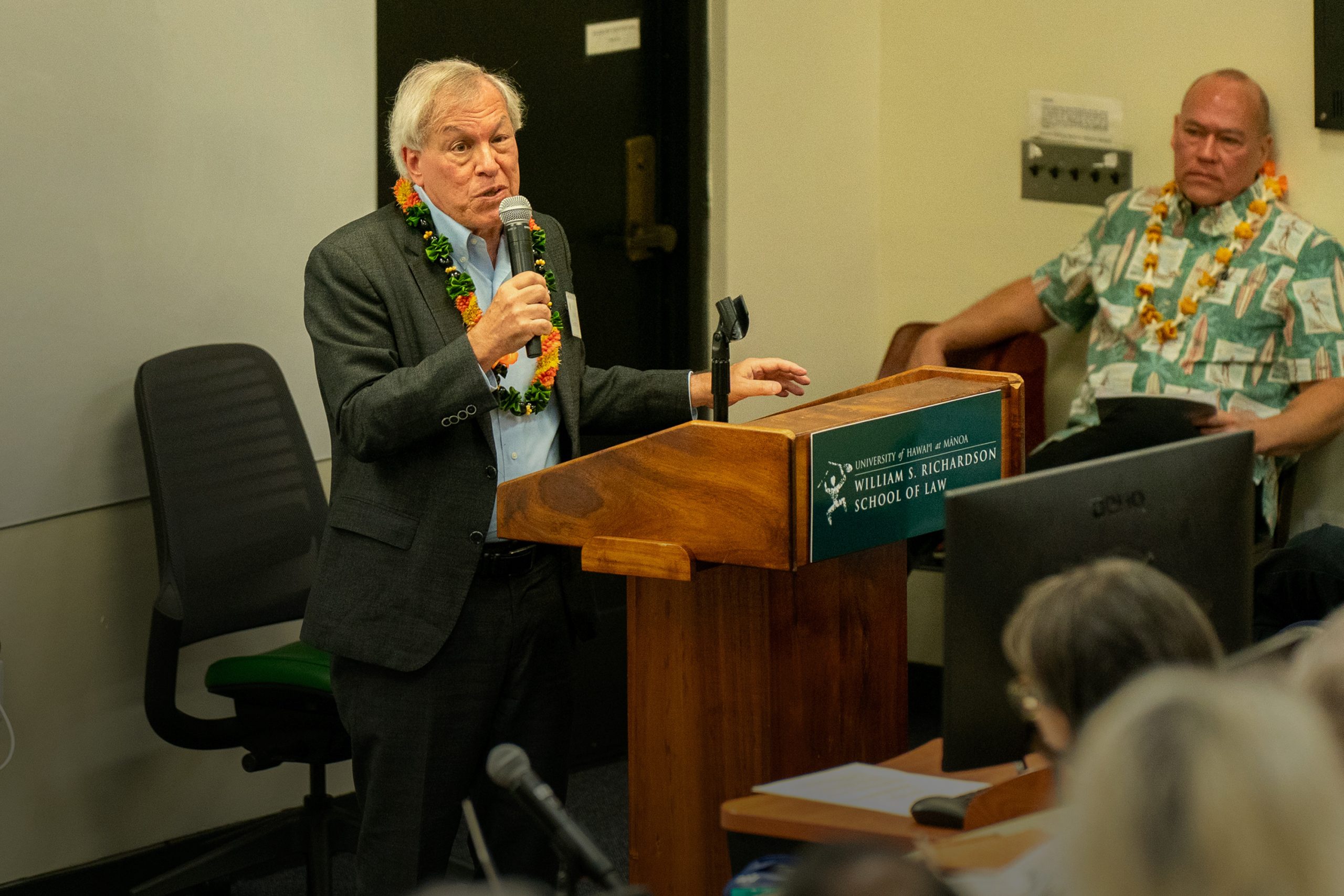
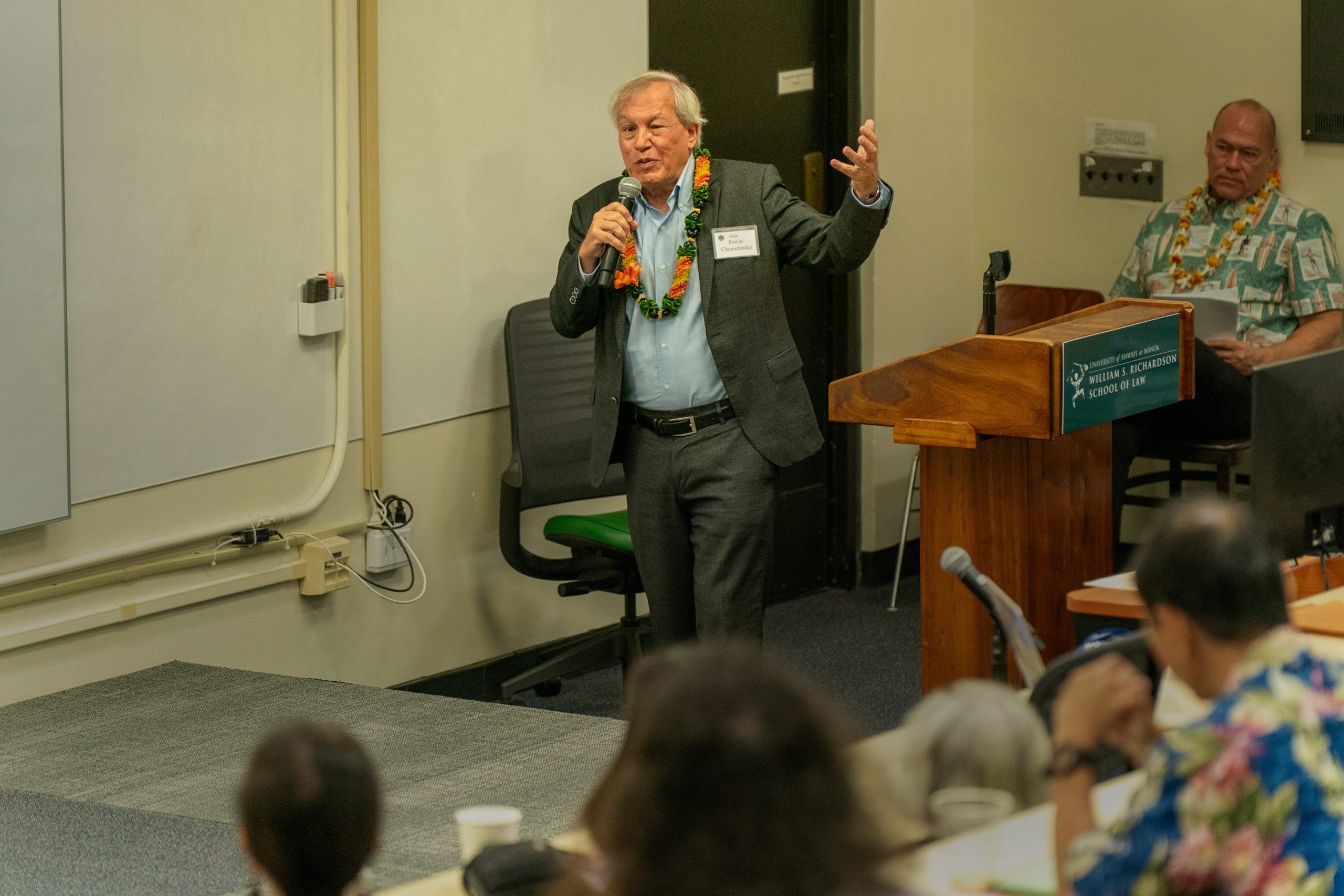
Erwin Chemerinsky, dean of the University of California, Berkeley School of Law speaks at the 2026 Hawaiʻi Access to Justice Conference at the University of Hawaiʻi’s William S. Richardson School of Law on June 19, 2026.
The conference keynote address was delivered by Erwin Chemerinsky, dean of the University of California, Berkeley School of Law and one of the nation’s leading constitutional law scholars.
Chemerinsky focused his remarks on the barriers many people face when seeking justice and identified five essential components of access to justice: affordability of legal representation, availability of legal representation, quality of representation, a fair process, and timely resolution of cases.
Among the challenges he highlighted were the high cost of legal services, shortages of attorneys in many communities, and the growing number of individuals who must navigate legal proceedings without legal representation.
“One of the statistics that I find stunning is that three quarters of the civil cases in the United States, at least one side is not represented by counsel,” Chemerinsky said.
He also emphasized the importance of ensuring that legal proceedings are fair and timely, noting that delays in the justice system can have significant consequences for individuals and families.
The Hawaiʻi Access to Justice Conference is organized by the Hawaiʻi Access to Justice Commission to promote collaboration among courts, legal service providers, attorneys, educators, and community organizations working to ensure that all people, regardless of their circumstances, have meaningful access to justice.
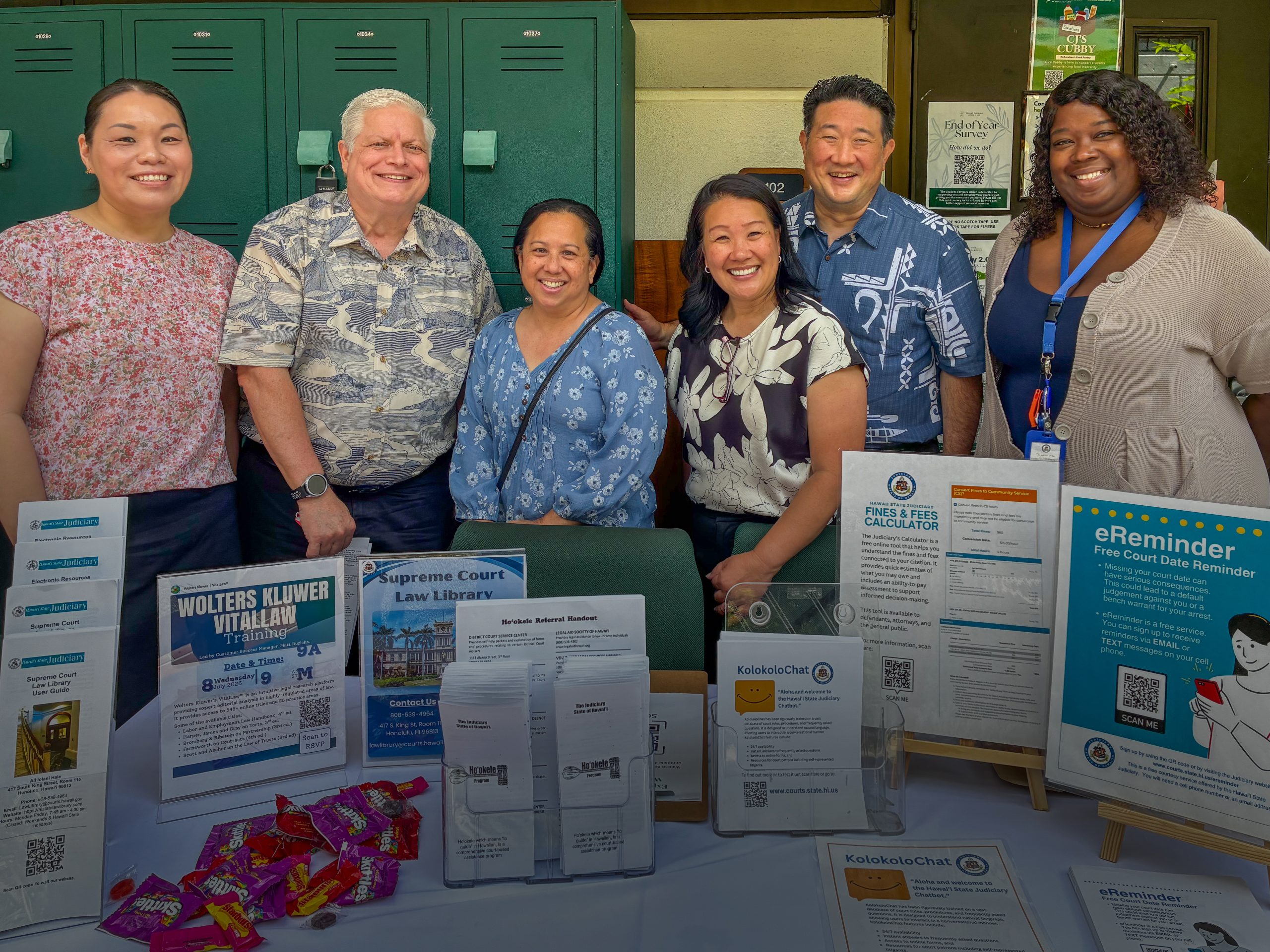
Special Assistant Angela Min, Assistant Court Administrator John Hausler, Assistant Court Administrator Michelle Torres, Deputy Chief Court Administrator Michelle Acosta, Court Administrator Jacquetta Livingston at the Judiciary’s booth at the 2026 Hawaiʻi Access to Justice Conference.
2026 Access to Justice Workshops
The State of Public Interest Law: Voices from the Field
Angela Lovitt (facilitator), Henderson Huihui, Ashley Kaono, Jamie DeMello, Nanor Wong
Panelists from a variety of organizations shared perspectives on public interest law practice, discussing challenges, opportunities, resource limitations, systemic barriers, and successes in serving their communities.
I Can’t Pay My Rent, Now What?
Tracey Wiltgen (facilitator), Judge Shellie Park-Hoapili, Richard M. Crum, Konrad Ng
This session examined Hawaiʻi’s new early eviction mediation program established under Act 278 and explored whether the initiative is helping landlords and tenants resolve disputes and avoid eviction.
The Continuing Immigration Crisis
Corey Park (facilitator), Veronica Mendoza, Neribel Chardon, Pilar P. Kam
Panelists discussed the impact of current immigration policies on Hawaiʻi’s immigrant communities and explored ways attorneys and advocates can expand legal and community support services.
Expungement and Compassionate Release
Makalika Naholowaa (facilitator), Judge Kirsha Durante, Dawn Nekoba, Joshua Ching
Presenters reviewed the laws, policies, and procedures governing expungement and compassionate release, highlighting opportunities to reduce barriers and improve outcomes for affected individuals and families.
Overcoming Barriers to Access to Justice for People with Developmental Disabilities
Heather Lusk (facilitator), Che Silvert, Louis Erteschik, Kathryn Mayer
This workshop focused on improving access to justice for people with developmental and intellectual disabilities through accommodations, plain-language communication, guardian ad litem services, and other best practices.
Key Aspects of Health Care Decision-Making in Hawaiʻi: Informed Consent, Capacity, and New Directions for Hawaiʻi
James Pietsch, Marvin Acklin
Presenters provided updates on health care decision-making laws and discussed ongoing challenges involving informed consent, capacity, mental health treatment, and surrogate decision-making.
Debt Collection and Access to Justice
Retired Judge Joseph Cardoza (facilitator), Judge Michael Soong, Judge Jill Hasegawa, Christine Daleiden
This session examined debt collection litigation and its impact on access to justice for civil litigants.
Appellate Pro Bono Program
Ethan Rabinowitz (facilitator), Sharla Manley, Judge Kirstin M. Hamman, Grant Teichman
Panelists highlighted the success of Hawaiʻi’s Appellate Pro Bono Program, discussed volunteer attorney participation, and explored opportunities for future expansion.
Increasing Access to Justice for All ʻOhana in Hawaiʻi
Judge Jessi Hall (facilitator), Judge Andrew Park, Carol Lockwood
This workshop examined Hawaiʻi’s new parentage law and its implementation, including provisions designed to ensure equal treatment of children and families regardless of gender, sexual orientation, or marital status.
Erwin Chemerinsky, at the 2026 Hawaiʻi Access to Justice Conference.