Task Force Formed to Strengthen Hawaiʻi’s Legal Services and Address Attorney Workforce Trends
Posted on Mar 23, 2026 in Featured News, News & Reports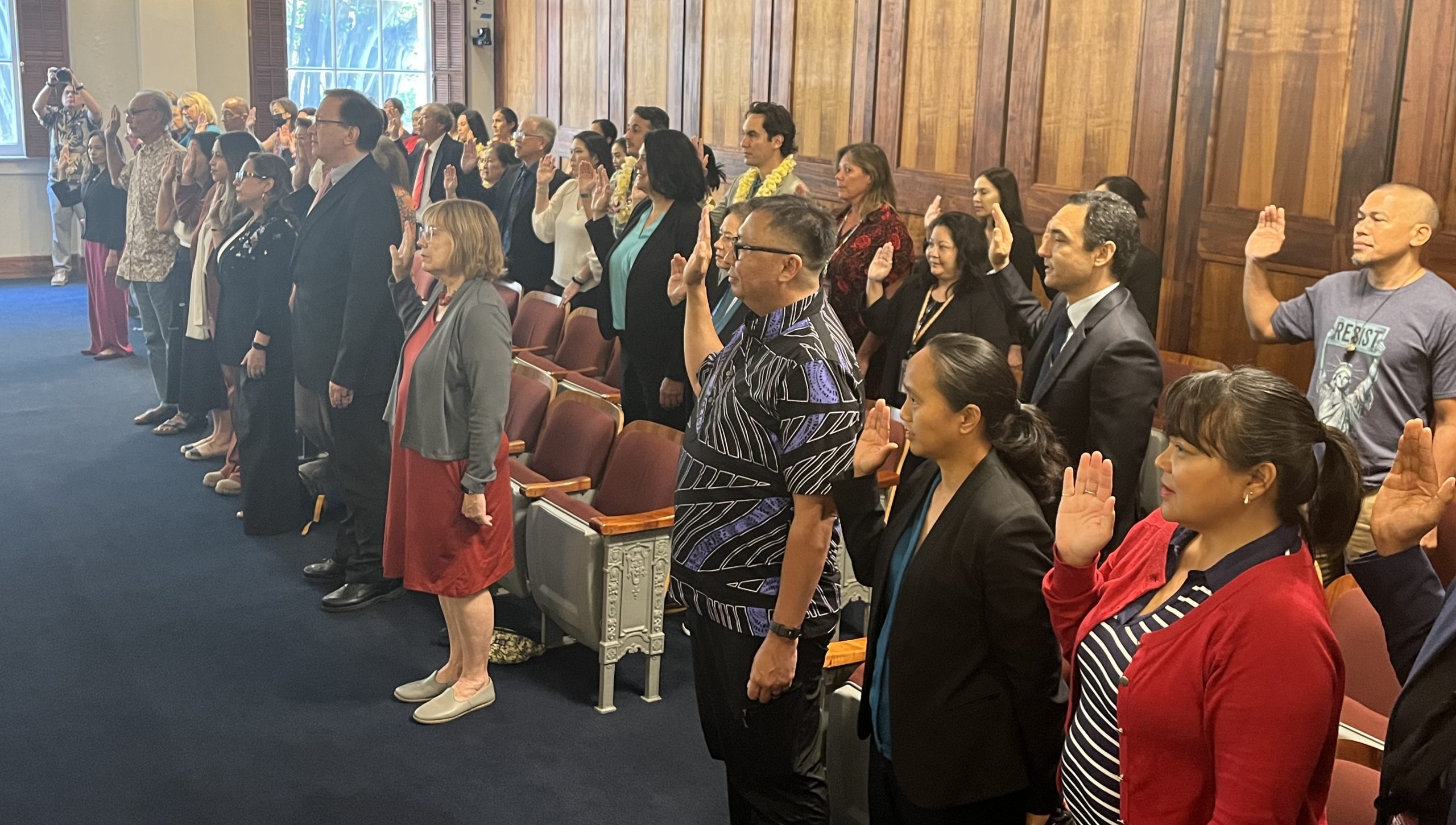
Attorneys gathered at Hawaiʻi Supreme Court on Law Day, May 1, 2025, to reaffirm their oath to support and defend the Constitution of the United States and the Constitution and laws of the State of Hawaiʻi.
On March 16, 2026, Acting Chief Justice Sabrina S. McKenna established a Task Force on Hawaiʻi Legal Services to examine emerging trends affecting the state’s attorney workforce and to develop recommendations that support continued access to justice in the years ahead. The order establishing the Task Force highlights a combination of a lack of growth in the number of licensed attorneys and an aging bar that, over time, could further affect the availability of legal services statewide if left unaddressed.
According to the American Bar Association’s 2025 National Lawyer Population Survey, Hawaiʻi had 4,125 resident active attorneys as of December 2025. That number has remained unchanged from the previous year and reflects a 1.6 percent decrease since 2015. Over the same period, the national attorney population increased by 5.6 percent.
Demographic shifts further underscore the issue. Approximately 43 percent of Hawaii State Bar Association members are over the age of 60, signaling that a significant portion of the legal workforce is nearing retirement. At the same time, the number of new attorneys entering the profession has declined over the past several decades, resulting in fewer attorneys available to meet the legal needs across Hawaiʻi.
Taken together, these trends point to impacts on the justice system that are already occurring and may exacerbate in the years ahead unless appropriately addressed. A reduced supply of attorneys could affect the timely disposition of cases, limit access to legal representation in criminal, civil, and family matters, and create greater challenges for residents in rural and underserved communities. Acting Chief Justice McKenna’s order also notes that insufficient attorney availability risks undermining defendants’ constitutional rights in criminal cases and limits meaningful access to justice more broadly.
“The availability of quality legal representation is essential to ensuring access to justice and the fair administration of our justice system,” said Acting Chief Justice McKenna. “This task force brings together a diverse group of leaders and stakeholders to help identify solutions that will broaden and strengthen Hawaiʻi’s legal services now and into the future.”
The Task Force is charged with conducting a comprehensive review of Hawaiʻi’s legal services landscape. Its work will include assessing current and projected attorney workforce needs across practice areas and geographic regions, identifying barriers to recruitment and retention, and examining pathways to licensure and professional training. It will also evaluate regulatory frameworks governing legal services and consider whether changes should be made to improve access while maintaining professional standards. The Task Force will also focus on strategies to support communities where access to legal services is limited, including rural areas, and recommend policies or programs aimed at ensuring continued availability of qualified legal representation statewide.
Associate Justice Todd W. Eddins and Mark M. Murakami, the immediate past president of the Hawaii State Bar Association, will serve as co-chairs. The Task Force includes members from the judiciary, William S. Richardson School of Law, private practice, government agencies, and legal services organizations, reflecting a broad cross-section of the legal community.
The Task Force is to submit a final report with findings and recommendations to the Hawaiʻi Supreme Court by September 30, 2027. Its work will help guide future efforts to strengthen the legal profession in Hawaiʻi and ensure that residents across the state have meaningful access to legal services.